
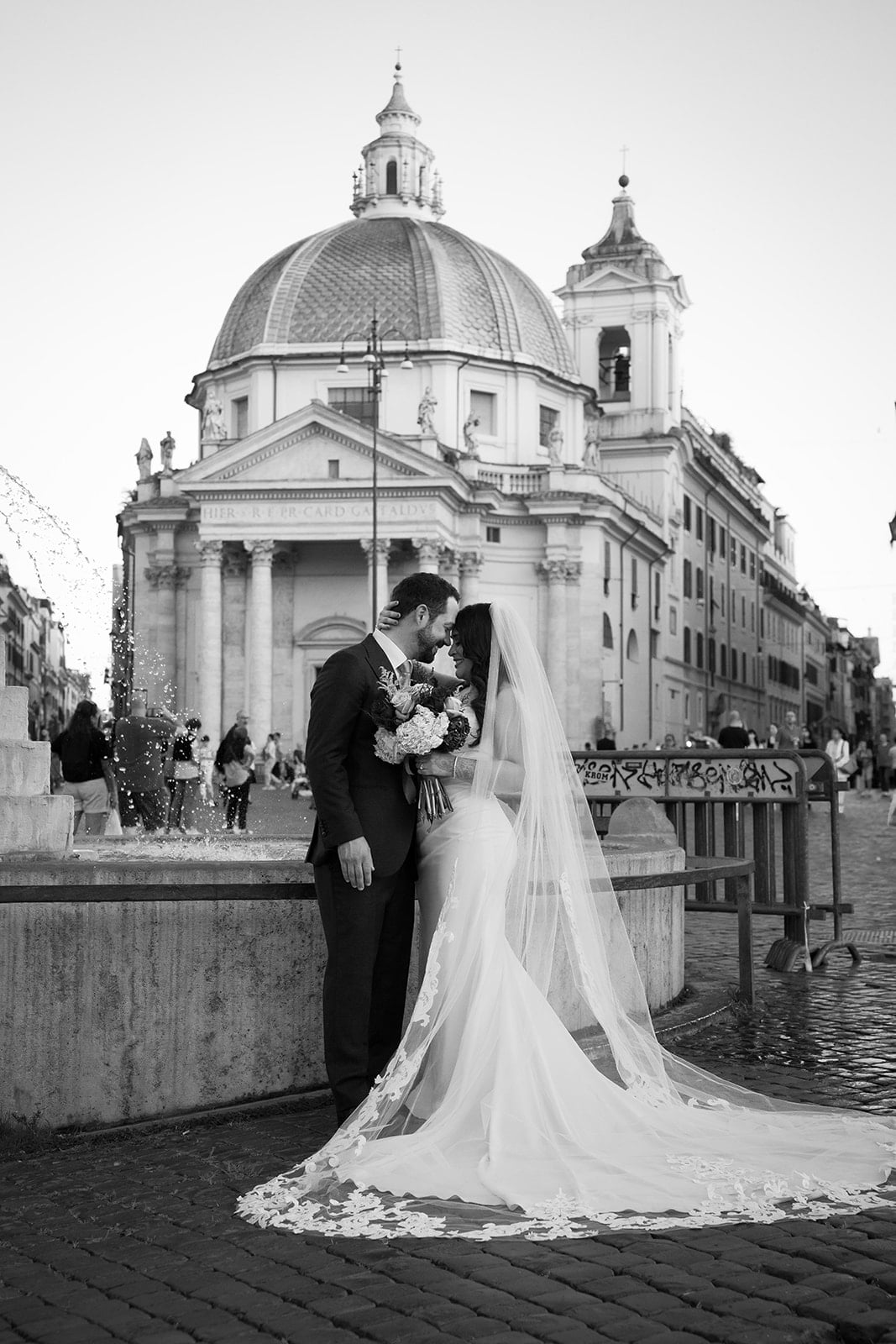
Your Guide to a Destination Wedding in the Eternal City
A Rome wedding planner is negotiating with a 400-year-old palazzo's property manager one hour and a modern rooftop venue's events team the next — Rome's wedding venues span more architectural eras than almost anywhere else in Italy, and each comes with its own rules. Italian Knot has planned Rome weddings for international couples for over a decade.
Why Couples Choose Rome for a Destination Wedding
You want a wedding that feels like history, not a theme. Rome delivers that without staging — over 400 churches, ancient ruins as a backdrop, and villas with the kind of provenance no newly built venue can replicate.
That history comes with real constraints. Many historic venues restrict vendor access hours, require specific insurance, or limit amplified sound near residential buildings. A Rome wedding planner clears those restrictions ahead of time, before they become a surprise on your wedding morning.
Get a personalized wedding quote → italianknot.it/wedding-planning-quote
Best Venues for a Wedding in Rome
Rome's venues fall into a few distinct categories, each suited to a different vision:
Roman villas and private estates — walled gardens and frescoed interiors, often just outside the city center, ideal for 50–150 guests.
Historic palazzos — city-center properties with centuries of history, best for couples prioritizing architecture and a shorter guest commute.
Rooftop and modern venues — contemporary spaces with skyline views of the Colosseum or St. Peter's dome, popular for smaller receptions and welcome dinners.
Church and civic ceremonies — for couples pursuing a religious or civil ceremony within the city itself, subject to specific parish or municipal requirements.
Getting Legally Married in Rome
Rome offers more legal ceremony options than most Italian destinations, including civil ceremonies through the city's municipal offices and religious ceremonies through Rome's parish network — though both require advance paperwork and, for religious ceremonies, documentation from your home diocese.
Many international couples still choose a symbolic ceremony in Rome and finalize legal paperwork at home, since it removes residency requirements and gives full control over the officiant, script, and location. For couples pursuing a legally binding ceremony, 3–6 months of lead time is standard once translation and the Nulla Osta are factored in. The U.S. Department of State's guidance on marrying abroad outlines the general documentation process for American couples.
When to Get Married in Rome
Rome's wedding season runs nearly year-round, which sets it apart from Italy's countryside regions:
- April–May and September–October: the most requested months — mild temperatures without summer's tourist crowds at major landmarks.
- June–August: heavy heat and the highest tourist volume in the city center, which affects both comfort and venue access.
- November–March: a genuine off-season option, with lower venue costs and interiors — like frescoed palazzo halls — that don't depend on outdoor weather at all.
What Planning a Rome Wedding With Italian Knot Looks Like
Rome weddings often involve more moving pieces than countryside venues — permits for historic sites, coordination with parish offices, guest transport across a larger city. Roberta's team manages each piece directly, translating every requirement and negotiation, so international couples aren't the ones calling a Roman municipal office at 9 a.m. local time from a different continent.
Final Thoughts
Rome offers something the countryside can't: a wedding day set inside centuries of history, with year-round options most other Italian destinations don't have. The tradeoff is navigating a city's worth of permits and logistics — which is exactly the part a planner exists to handle.
Tell us your love story → hello@italianknot.it or WhatsApp +1 212-837-8682
Rome Wedding Planner FAQs
How much does a wedding planner in Rome cost?
Pricing depends on venue type, guest count, and season — a historic palazzo wedding prices differently than a rooftop reception. Italian Knot builds a custom proposal for every couple; request a personalized quote for numbers specific to your vision.
Can I get legally married in Rome as a foreigner?
Yes, both civil and religious legal ceremonies are possible in Rome for foreign nationals, though each requires specific documentation and advance notice — typically 3–6 months once translations and certificates are in order. Many couples opt for a symbolic ceremony instead and handle legal paperwork at home.
Is Rome a good choice for a destination wedding, or just Tuscany and the coast?
Rome offers something the countryside regions don't: near year-round wedding dates, since indoor historic venues aren't weather-dependent the way outdoor countryside ceremonies are. It's a strong option for couples who want history and architecture as the centerpiece rather than landscape.
How far in advance should I book a Rome wedding planner?
For April–May and September–October dates, 9–15 months ahead is standard, since the most requested historic venues and vendors book early. Winter dates (November–March) often have more availability with shorter lead times.
What's the best time of year for a Rome wedding?
April, May, June, September, and October offer Rome's best combination of comfortable temperatures and manageable crowds. Winter months are an underused option for couples prioritizing indoor historic venues and lower costs.